Glass, Steel, and One Very Famous Barstool
It didn't arrive quietly.
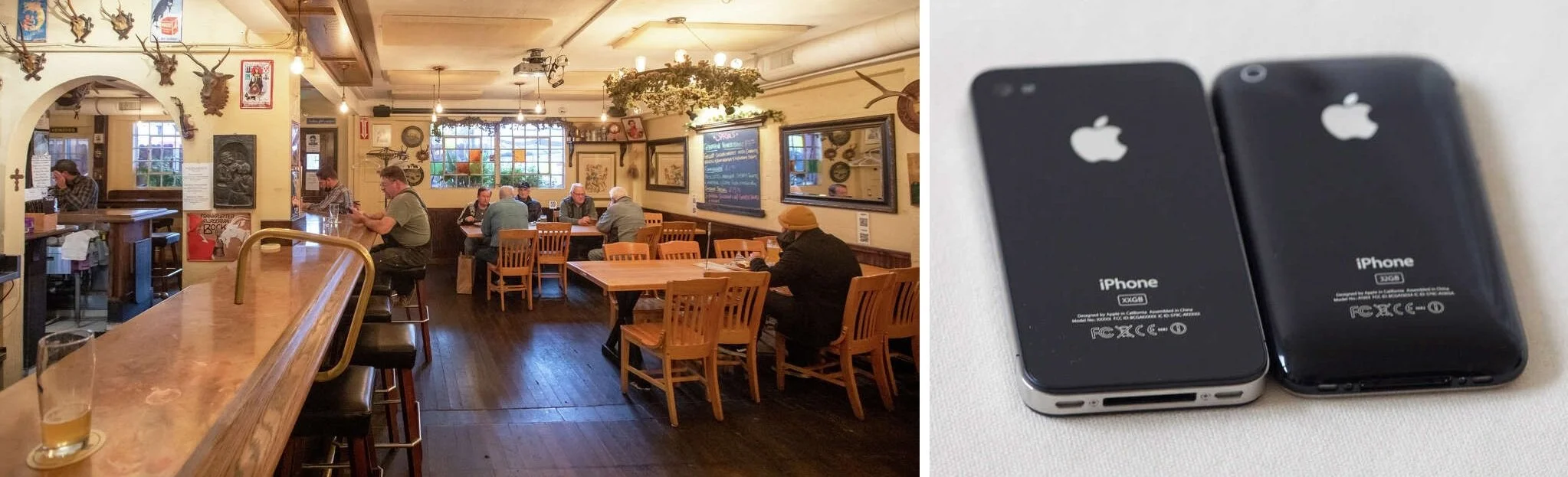
Six weeks before Apple was ready to announce it, a prototype iPhone 4 turned up in the hands of a tech journalist — left on a barstool at a bar in Redwood City, California, by an Apple engineer who'd been celebrating his birthday. The device was bought for $5,000. Photos went around the world within hours. Apple sent lawyers. It didn't matter. Everyone had already seen it.
What Came Before
By 2010, the iPhone had already changed the world once. The 3GS was fast and capable — the first iPhone to feel genuinely grown up. But it looked almost identical to the phone Apple had launched three years earlier. Rounded plastic, same proportions, same familiar shape. The hardware had plateaued. Nobody was prepared for what Jony Ive had been working on.
The Design That Stopped the World
Flat, precision-cut glass front and back. A surgical stainless steel band running the full perimeter. Sharp-edged, almost severe. It looked less like a consumer phone and more like a piece of Swiss watchmaking.
People who held one for the first time reached for the same word: jewellery.
Ive had long been influenced by Dieter Rams — the German designer whose work for Braun established a philosophy of honest, purposeful materials. Nothing decorative, nothing hidden. The iPhone 4 was the fullest expression of that idea Apple had ever produced. What you saw was what it was, all the way through.
Antennagate
That stainless steel band also served as the phone's antenna. Elegant in theory — integrate the antenna into the structure, eliminate a separate component, keep the interior clean.
In practice, hold it naturally in your left hand and signal dropped.
Jobs' initial response — "Just avoid holding it in that way" — became one of the most mocked lines in Apple's history. Apple eventually held a press conference, offered every customer a free bumper case, and spent roughly $175 million making the problem go away.
The iPhone 4 kept selling. Faster than any iPhone before it.
What It Introduced
The Retina display — 326 pixels per inch — was a genuine threshold moment. Text looked like print. Every rival screen, overnight, looked primitive. The A4 chip gave Apple full control over its silicon for the first time. The front-facing camera arrived quietly and launched something enormous: FaceTime, and the selfie era that followed.
In a single device, Apple introduced the screen that made all others obsolete, the chip architecture that would eventually power its laptops, and the camera orientation that would define how a generation documented their lives.
What We Found Inside
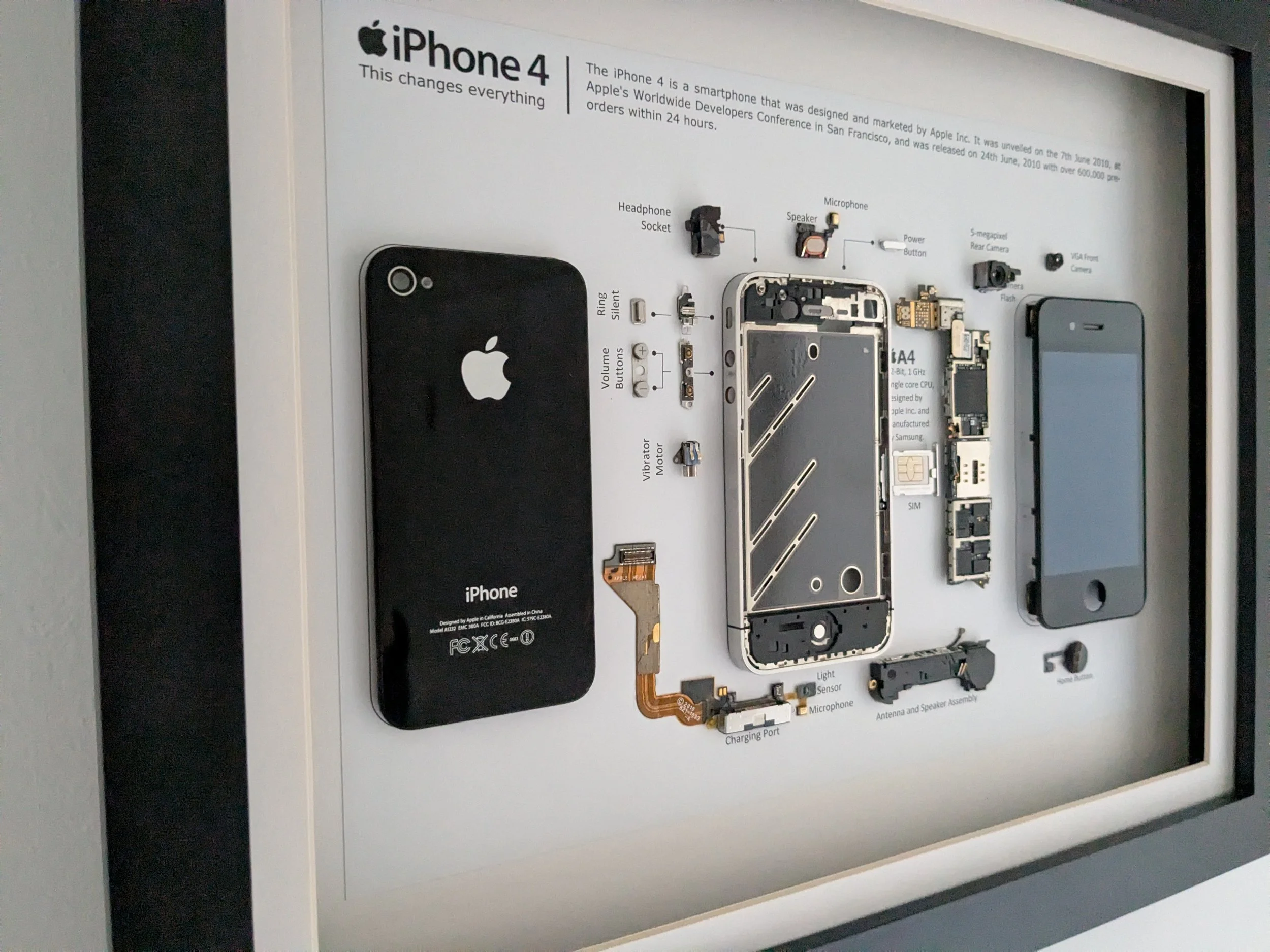
Opening an iPhone 4 is immediately different from anything else we disassemble at Tazar.
The internal layout is almost unnervingly precise — components seated with tolerances that feel closer to aerospace than consumer electronics. No wasted space, no casual compromise. Ive's obsession with the outside extended, it turns out, to the inside.
Most devices, when opened, reveal pragmatism. The iPhone 4 reveals conviction. And when you lay those components out properly — which is exactly what we do — you start to understand that this wasn't just a phone. It was an argument about what manufacturing could be.
Why It Still Matters
The iPhone 4 was discontinued in 2013. But in 2020, Apple brought its design back almost wholesale with the iPhone 12 — the same sharp corners, the same steel band, the same philosophy. Fifteen years on, Ive's instinct turned out to still be correct.
Some designs aren't of their moment. They're simply right.
When you see the iPhone 4's components laid out in a frame, you're not looking at a broken phone. You're looking at the inside of an idea that refused to age.
“This is the most beautiful thing I’ve ever designed.”
The iPhone 4 artwork is available here.