Nintendo's Humble Masterpiece
“In 1989, Nintendo put a grey plastic brick into the world and dared people to care about it. No colour screen. No backlight. Four AA batteries for roughly fifteen hours of play. On paper, it had no right to win. And yet it did — comprehensively, and for over a decade.”
The story of the Game Boy is, at its core, a story about the right priorities. Its rivals like the Sega Game Gear, the Atari Lynx, the NEC TurboExpress, were all technically superior. Colour screens, sharper graphics, more processing power. They looked better in the shop. They cost more. And they all died quietly while the Game Boy kept selling.
Nintendo's answer to every objection was the same: battery life and durability. Where the Game Gear devoured six AA batteries in three to five hours, the Game Boy sipped its way through four and kept going. For a device aimed at children on car journeys and commuters on trains, that wasn't a minor advantage — it was everything.
The Man Behind the Machine
The Game Boy was the creation of Gunpei Yokoi, one of Nintendo's most quietly remarkable engineers. Yokoi's philosophy was something he called "lateral thinking with withered technology" — the idea that mature, inexpensive technology, cleverly applied, beats cutting-edge hardware every time. He had already proven the principle with the Game & Watch handheld series in the early 1980s. The Game Boy was his masterpiece.
Yokoi deliberately chose an older, cheaper processor. He chose a monochrome screen. He chose simplicity at every turn. Not because Nintendo couldn't afford better — but because better, in this case, would have missed the point entirely.
"Withered technology, lateral thinking."— Gunpei Yokoi, Nintendo
Tetris: The Accidental Masterstroke
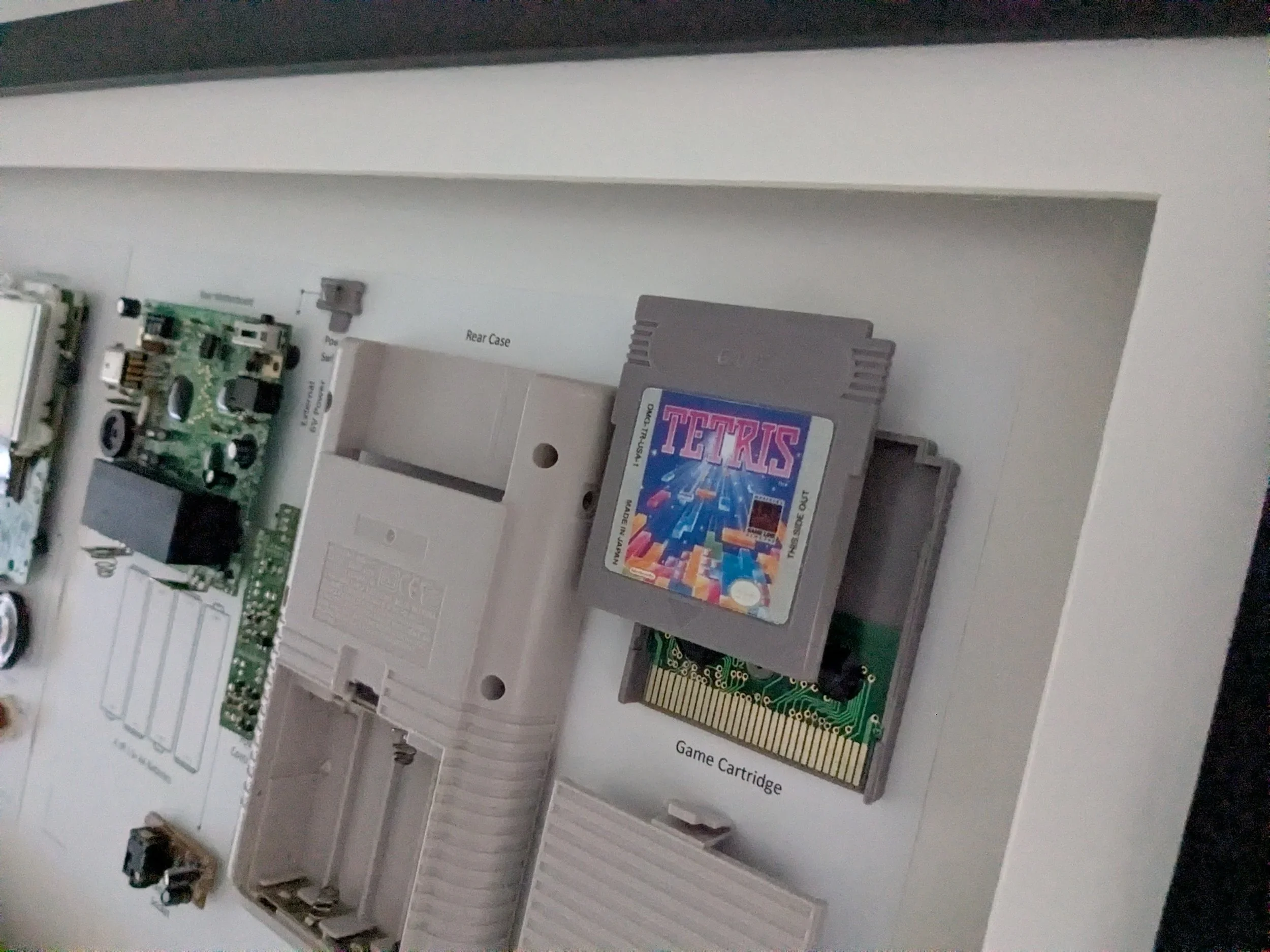
The Game Boy launched in Japan on 21st April 1989, and in North America that summer. Nintendo made one decision that would define its fate: bundling the device with Tetris instead of Super Mario Land.
It was a controversial internal call. Tetris was a puzzle game — simple, Soviet-designed, with no characters and no story. But it was also completely, dangerously addictive. It reached people who had never considered themselves gamers: parents, commuters, office workers, grandparents. Tetris turned the Game Boy from a toy into a phenomenon.
By 1990, the Game Boy was selling faster than Nintendo could manufacture it. In its first year alone, it shifted over a million units in the US. The grey brick had found its audience — and its audience turned out to be everyone.
A Decade of Dominance
What followed was a run of success that few consumer products have matched. Pokémon Red and Blue arrived in 1996 — originally for the original Game Boy — and triggered a cultural moment that still hasn't fully faded. The Link Cable, a simple wire that let two Game Boys connect, gave children their first experience of multiplayer gaming. Trading Pokémon in a school playground was, for a generation, a genuine social ritual.
The hardware evolved carefully. The Game Boy Pocket in 1996 slimmed things down. The Game Boy Color in 1998 finally answered the colour question. But the DNA — the proportions, the button layout, the cartridge slot — remained almost unchanged throughout. Nintendo had got it right the first time.
What We Found Inside
At Tazar Studios, we've spent a long time with the Game Boys. Taking them apart is a different experience from disassembling a smartphone. Where a modern phone is tight, dense, and almost impossibly miniaturised, the Game Boy is spacious and deliberate. Every component has room to breathe. The circuit board is legible — you can trace its logic with your eyes. It was built to be understood.
There's something deeply satisfying about an object that doesn't try to hide what it is. No glued seams. No hidden proprietary screws. Just clean, honest engineering laid out with care. It reminded us why we started Tazar in the first place — the beauty has always been inside.
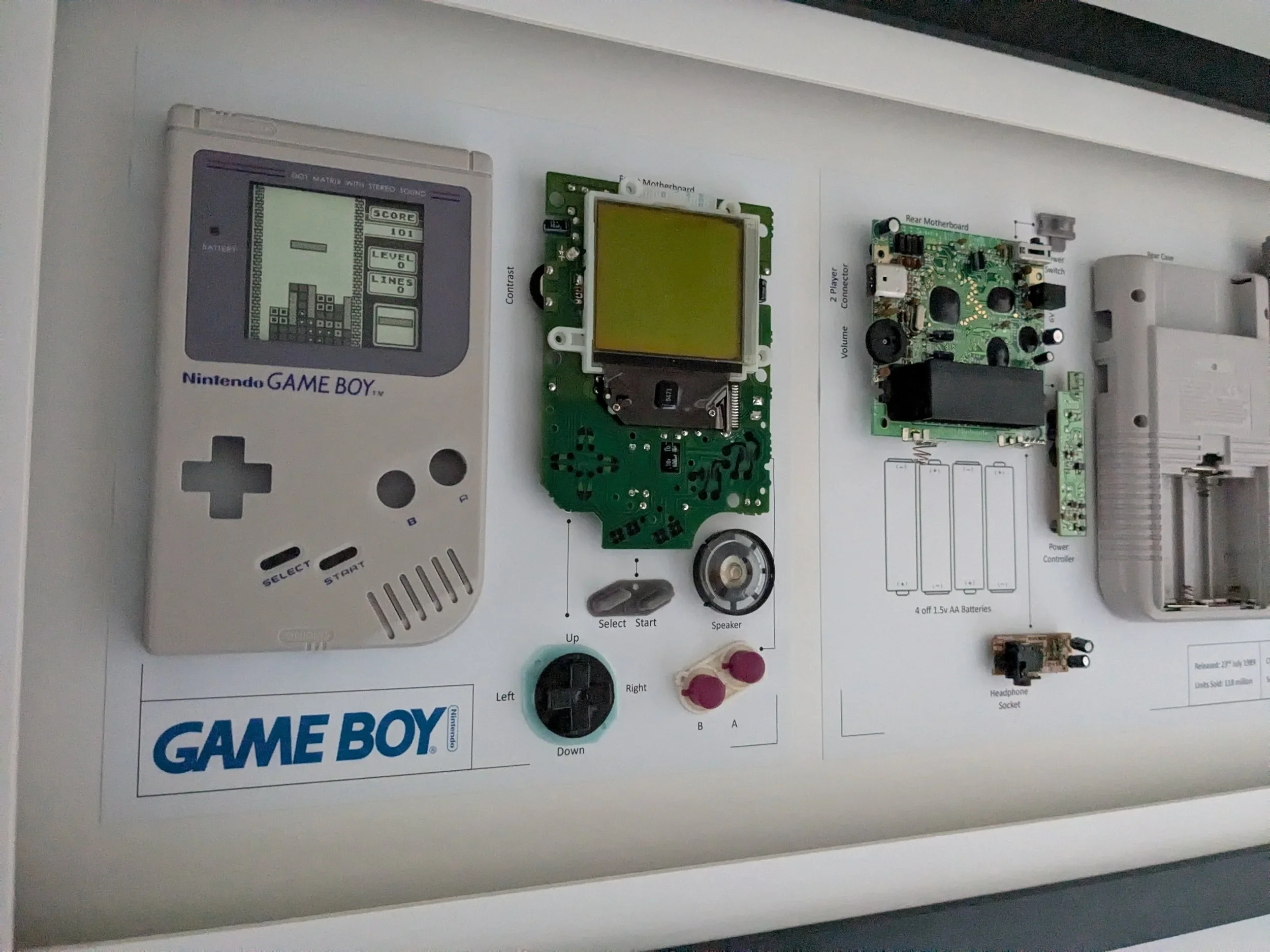
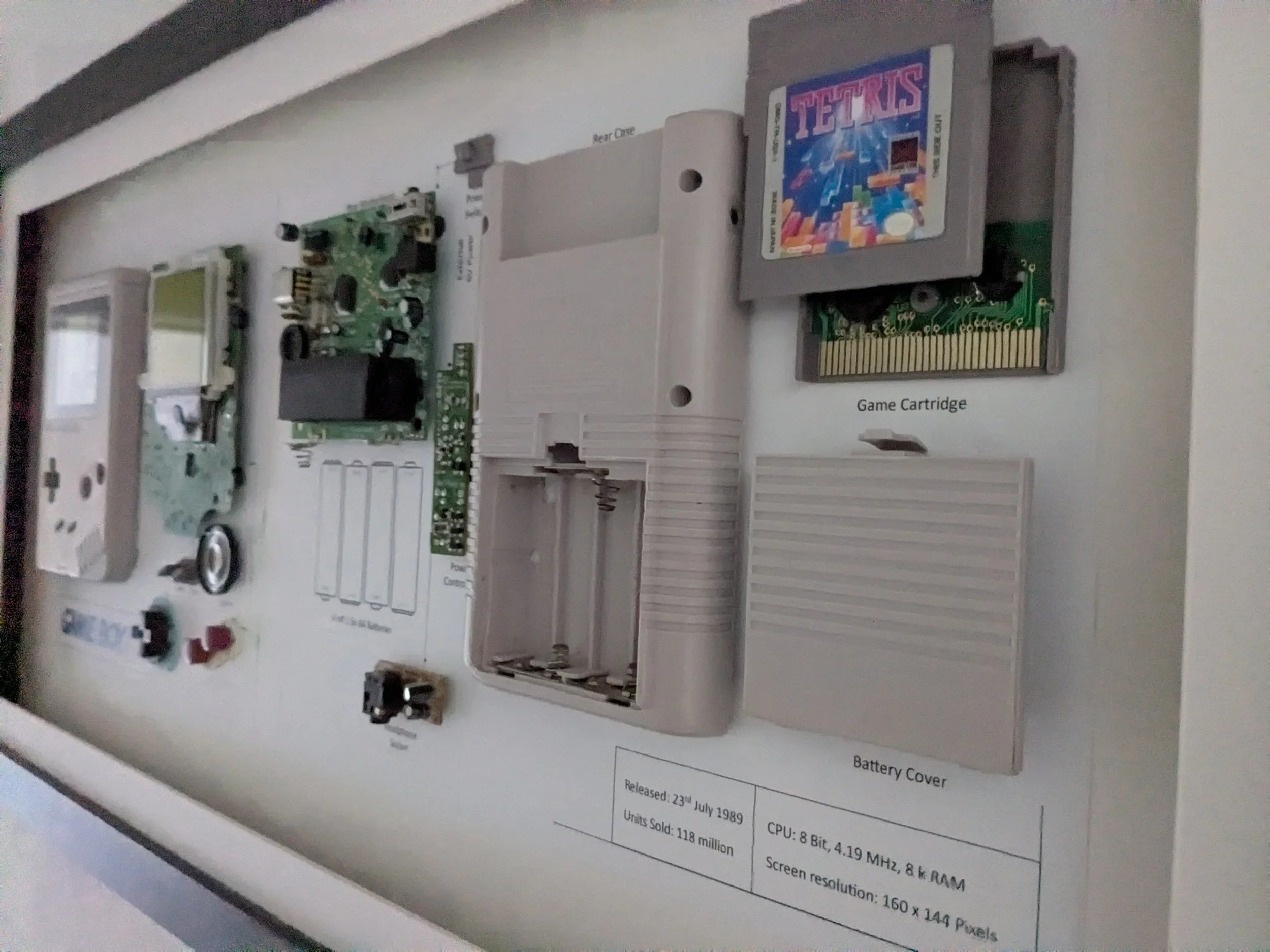
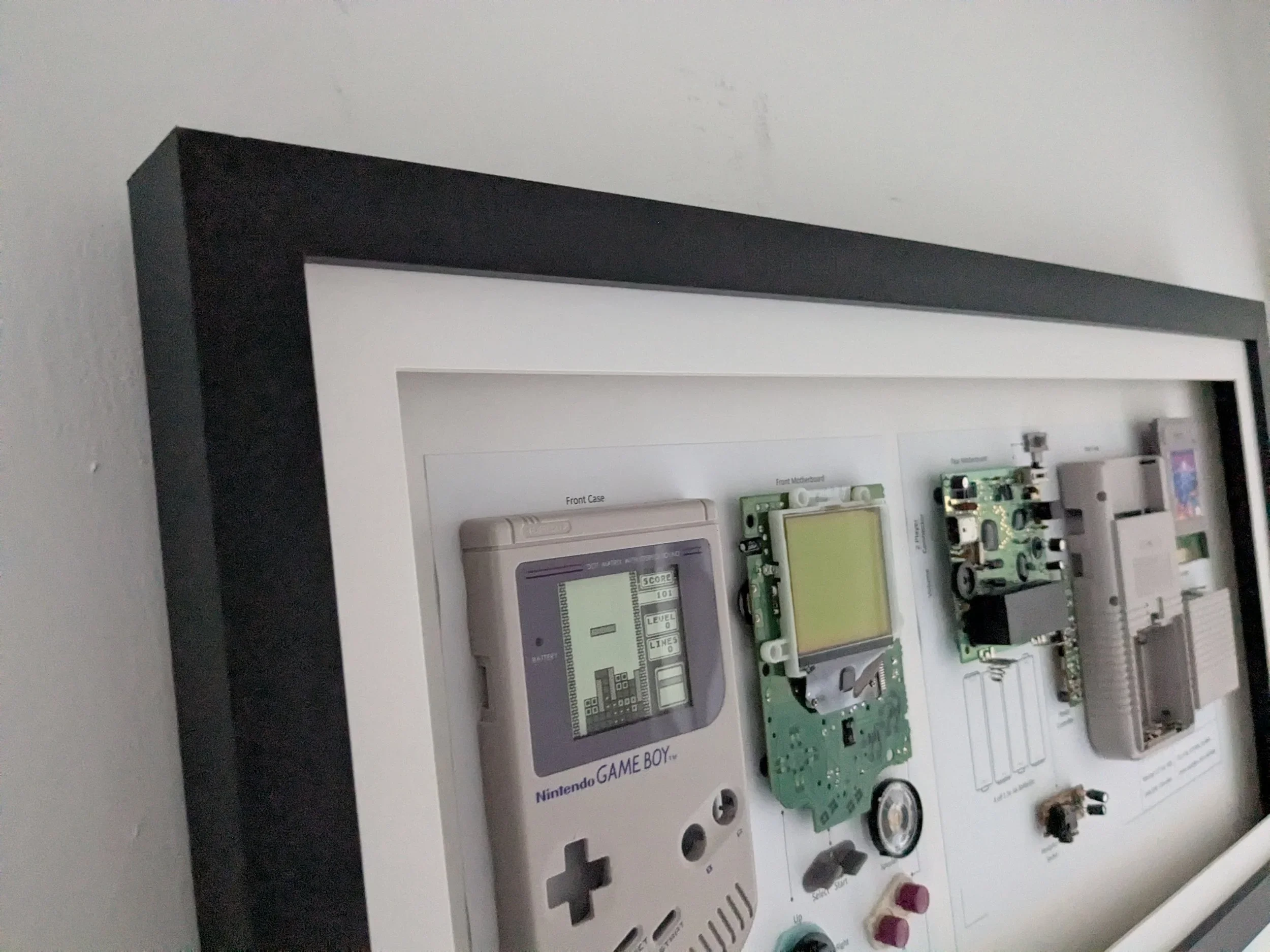
The Game Boy was discontinued in 2003, fourteen years after launch — outliving every rival by a margin that still seems improbable. Over 118 million units sold across the original and Colour models. A library of over a thousand games. And a place in the memory of almost every person who grew up in the 1990s.
Not bad for a grey plastic brick with a smudgy green screen.
Buy the artwork from here