The Nokia 1100
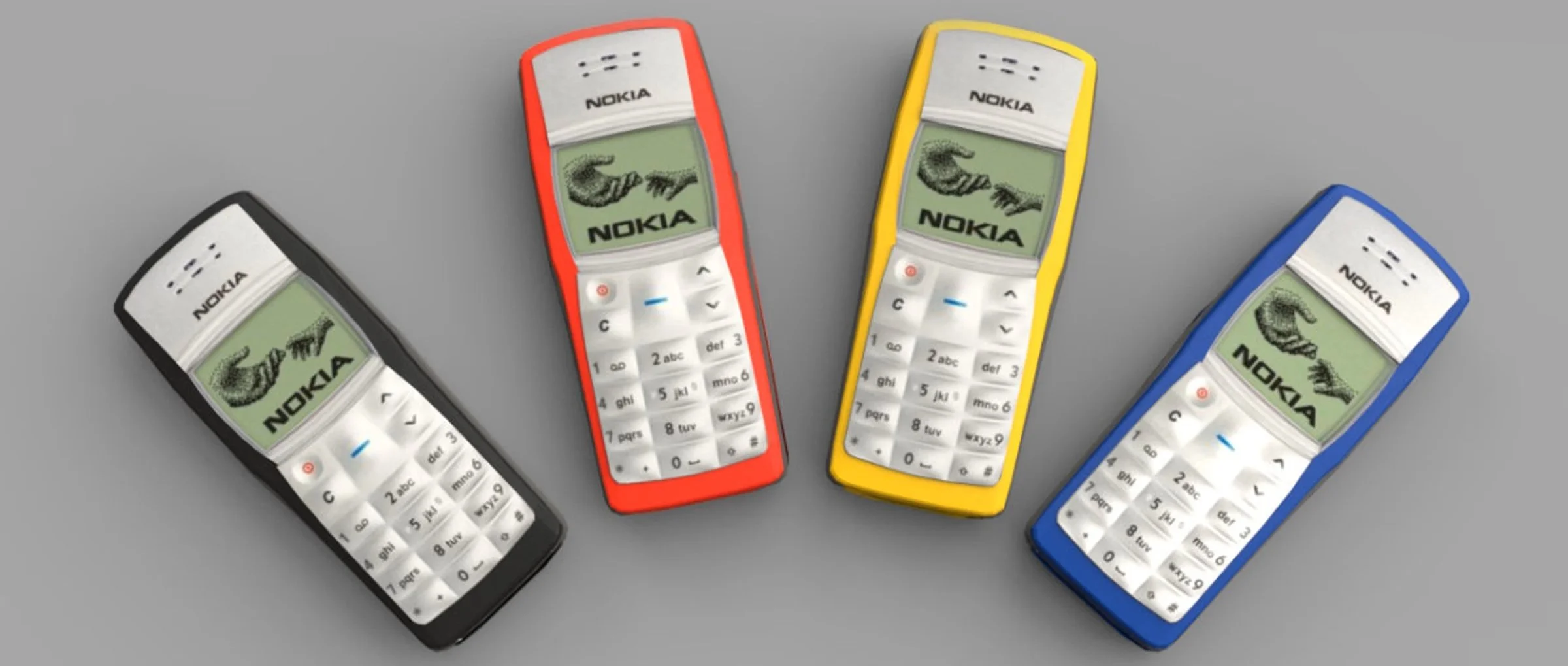
The Unbreakable Little Phone That Outsold the Entire Smartphone Industry
In 2003, the mobile world was charging toward colour screens, VGA cameras, and the first hints of mobile internet. Manufacturers were locked in an arms race of features and flash. And then Nokia — at the height of its global dominance — did something completely counter‑cultural.
They released a phone with:
- No camera.
- No colour display.
- No Bluetooth.
- No frills whatsoever.
That phone was the Nokia 1100, and it went on to become the best‑selling mobile phone in history, with over 250 million units sold worldwide. No iPhone, no Samsung Galaxy, no modern flagship has ever come close.
This is the story of how a tiny monochrome handset quietly conquered the planet.
A 2003 Launch Built on Radical Simplicity
The Nokia 1100 launched in late 2003, designed not for tech enthusiasts but for the billions of people who simply needed a reliable, affordable way to communicate. Nokia’s designers focused on three pillars:
- Durability
- Battery life
- Affordability
It was engineered for emerging markets, rural communities, and environments where electricity wasn’t guaranteed and mobile infrastructure was still developing. In other words, it was built for the real world.
While competitors chased novelty, Nokia doubled down on necessity and that decision paid off on a scale no one predicted.
What Made the Nokia 1100 a Global Phenomenon
Durability That Became Legend
The 1100’s casing was dust‑resistant, grippy, and famously tough. It could survive drops, heat, humidity, and the occasional accidental wash cycle. In many regions, durability wasn’t a luxury — it was survival.
Battery Life That Felt Unreal
Thanks to its low‑power monochrome display and efficient internals, the 1100 routinely lasted several days (often over a week) on a single charge. In areas with unstable electricity, this wasn’t convenience, it was liberation.
A Price That Opened the Mobile World
The 1100 was intentionally inexpensive, making mobile communication accessible to millions of first‑time phone owners. For many, it wasn’t just a device; it was their first connection to the wider world.
Features That Actually Mattered
It didn’t have the bells and whistles of its competitors, but it had:
- A built‑in flashlight
- A dust‑proof keypad
- A replaceable battery
- Snake II and Space Impact+
- A design that worked in heat, cold, dust, and rain
It was a masterclass in designing for real‑world needs rather than marketing checkboxes, and the Sales Statistics made history
The Nokia 1100 sold over 250 million units, making it:
- The best‑selling mobile phone ever made
- The best‑selling consumer electronics device of all time
- A product whose sales dwarf even the most successful iPhones
Manufacturing spanned multiple continents, including Finland, Germany, China, Mexico, Brazil, and Hungary. Reflecting its global reach and demand.
Even today, no modern smartphone has come close to matching its numbers. A Legacy Modern Phones Can’t Touch
The Nokia 1100 represents a moment in tech history when simplicity wasn’t a compromise, it was a superpower. It democratized communication, connected communities, and proved that good design isn’t about excess, it’s about purpose.
In an era of fragile glass slabs and daily charging rituals, the 1100 stands as a reminder that sometimes the most revolutionary device is the one that simply refuses to die.
It didn’t try to be everything.
It just tried to be useful.
And that’s why it became unstoppable.
If you appreciate timeless engineering, you’ll love our Anatomy Collection, modern art celebrating the devices that defined an era. Check out our online shop today.